Excel TV ExcelTV

Budgets vs Actuals Target Chart in Excel

Updated
Budgets vs Actuals Target Chart in Excel

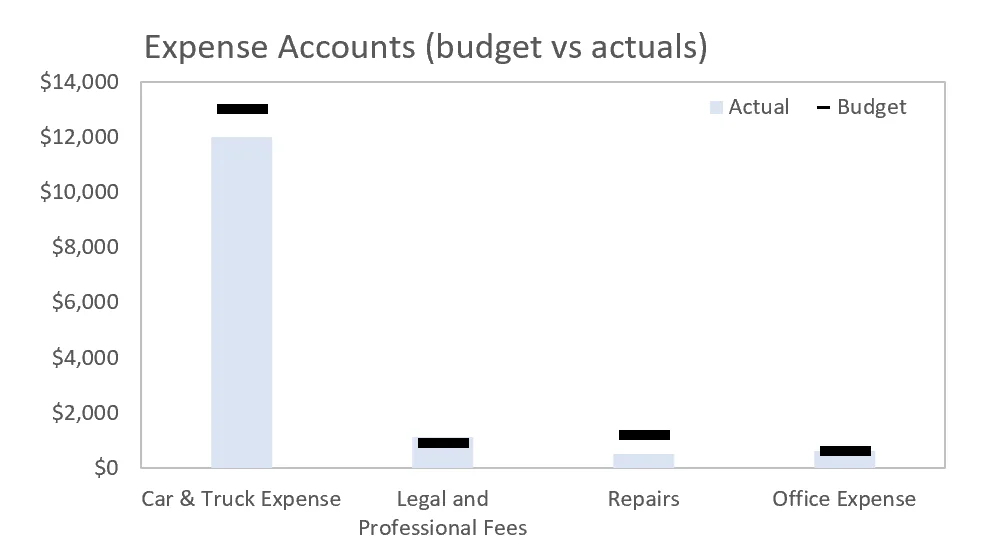
In this week’s episode of Excel.TV, we show you how to build a budget vs. Actuals chart. Really, though, this is what I call in my book Dashboards for Excel a performance-against-context type chart. It basically says: We have what we did against some context (in this case, a target). Take a look below. 

!

In this episode, I show you how to make the chart on your own. It’s a really quick process:

  1. Start with your data
  2. Place the data onto the a 2d clustered column chart
  3. Align the series to be on top of one another
  4. Change the chart type of your target series to a line chart
  5. Add markers and remove lines

And that’s about it. The rest is formatting.

1. Start with your data

!

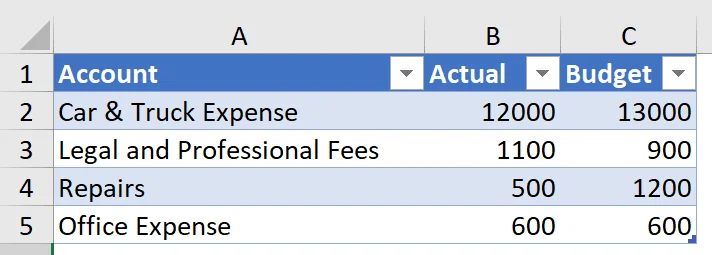
In our example file (you can download the file at the end of this post), we start with a list of accounts and their associated actual and budget amounts. 

2. Place data into 2d clustered column chart.

!

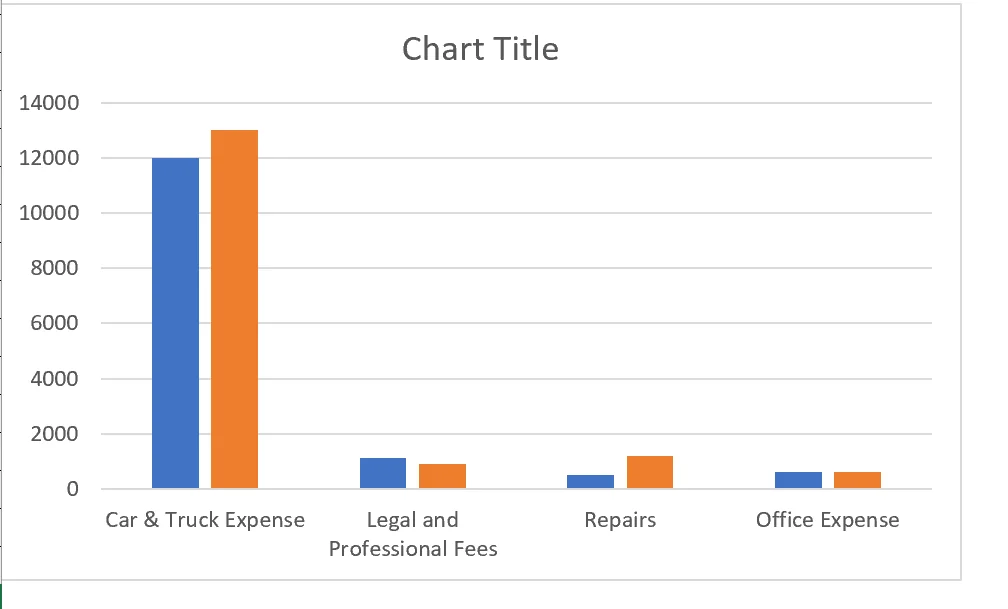
We can insert a 2d clustered column chart by going to Insert > 2d clustered column chart from on the ribbon tab. 

Once we’ve inserted a blank chart, we can highlight the data in the table above and press CTRL+C to copy. Next, we’ll select the blank chart we’ve just inserted and press CTRL+V to automatically paste the data into the chart. 

3. Align the series to be on top of one another

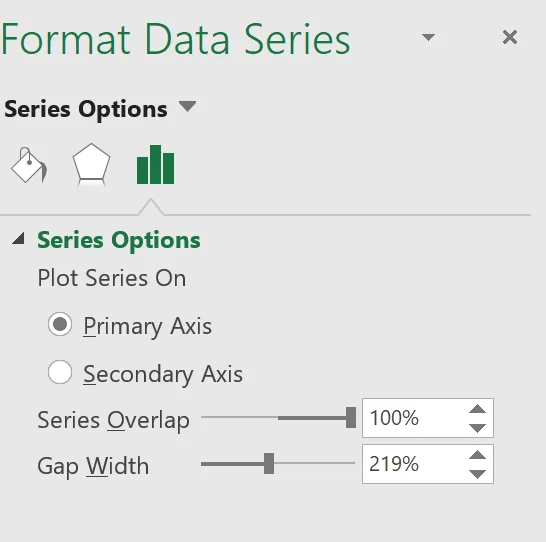
Next, we can right-click onto our budget series (the orange one in the figure) and select Format Data Series….

From the Format Data Series context pane, we’ll set the series overlap to 100%.

!

4. Change the chart type of your target (or context) series to a line chart.

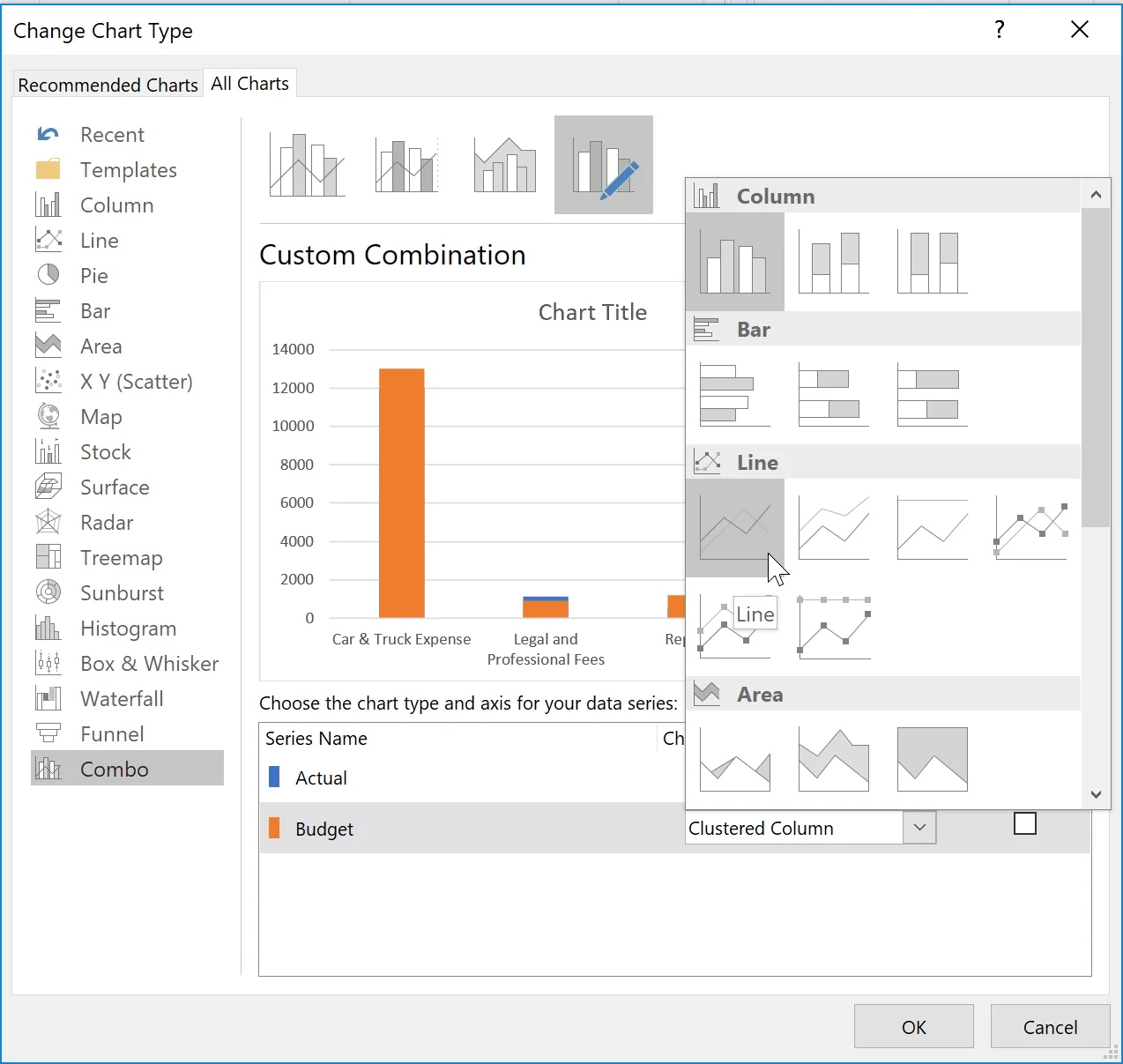
From here, we’ll right-click our target series (the orange one in the example) and select Change Series Chart Type….

This will bring up the Change Chart Type dialog box. From here, we’ll change the Budget series chart type to a line.

!

5. Add markers and remove lines

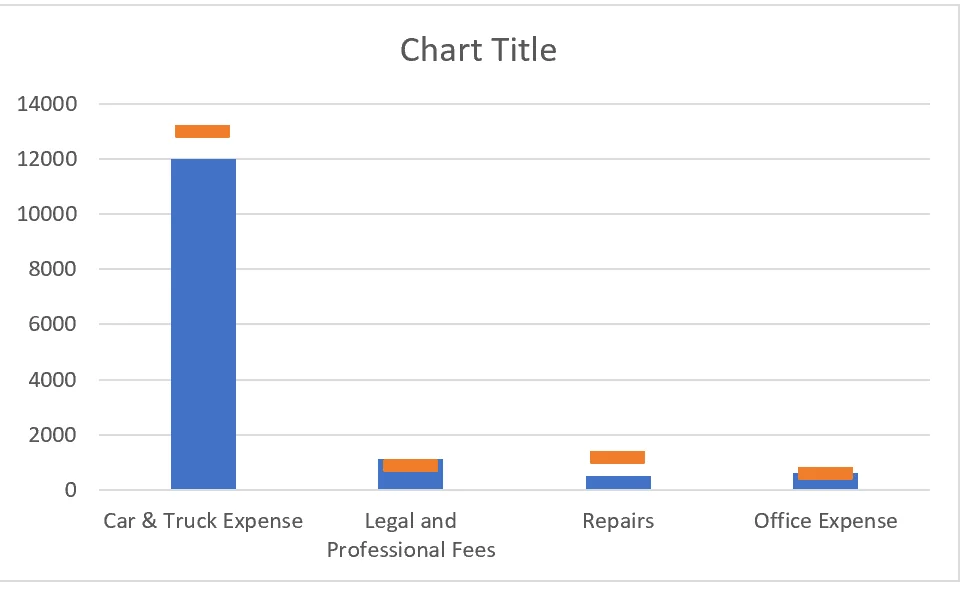
At this point, we’re ready to add markers and remove the lines on the line chart. From here, you can right click the orange line and select Format Data Series….

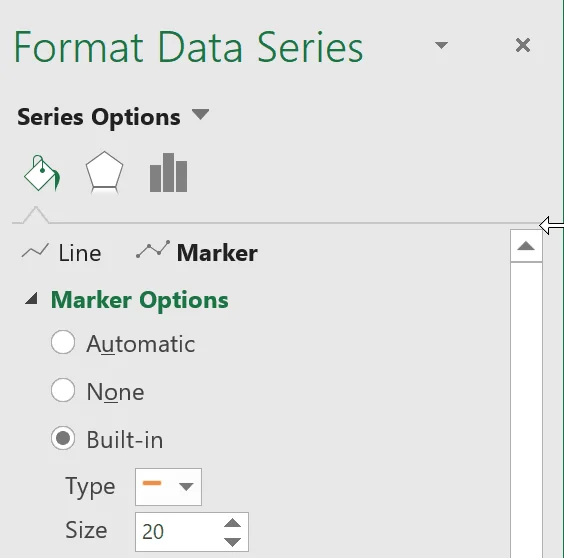
From in the Format Data Series context pane, select the Paint Bucket icon and then the Marker sub menu. From within the Market Options field you can select built-in, type “-“, and increase the size to something larger as I have in the image below. 

!

You can then remove the line on the chart from the Line menu (click on the Line option next to Marker option – use the image above for reference. From there, select No Line.

!

And that’s about it! The rest is just formatting! 

If you wanted to know how to format the chart like I have, make sure to watch the whole video! And down’t forget to snag the download file. 

Download File

Click the button below to get the download file!

Leave a comment!

Could you see yourself using this type of chart? What other types of data could it measure? Let us know what you think in the comments!

Written by

Jordan Goldmeier
Jordan GoldmeierCo-founder, Excel TVFormer Adjunct Instructor, Wake Forest University

Consultant, Anarchy Data · Instructor, Full Stack Modeller

  • Excel
  • Financial Modeling
  • Data Visualization
  • Analytics
Jordan Goldmeier is an accomplished data professional with a wealth of experience across various industries. He currently serves as a consultant at Anarchy Data, where he assists businesses in maximizing the capabilities of Excel for financial planning and analysis. Jordan is also an instructor at Full Stack Modeller and a former Adjunct Instructor in Analytics at Wake Forest University. His extensive career has seen him hold positions as the Chief Operations Officer at Excel.TV, Data Science Manager at DataKind, Data Scientist at Dealer Tire and EY, Analytics & Data Vis Developer at The Perduco Group, and Operations Research Analyst at Booz Allen Hamilton. Jordan's background in data analytics and his passion for Excel make him a valuable resource for businesses seeking to improve their data-driven decision-making processes.

Read more articles by Jordan Goldmeier

Editorial standards

Fact Checking & Editorial Guidelines

Every article on Excel TV is held to a published editorial standard. The goal: accurate, current, and useful — without filler.

  1. Expert review. Drafts on technical Excel topics are reviewed by a contributor with hands-on, working knowledge of the feature being covered.
  2. Source validation. Claims about Excel behavior are tested in current Microsoft 365 builds. Third-party product claims are sourced from the vendor's own documentation.
  3. Disclosure. Affiliate links, sponsorships, and any commercial relationships that influenced a piece are disclosed in-line and at the foot of the article.
  4. Updates. Articles are revisited when Microsoft ships changes that affect the content. The most recent revision date is shown on every post.

Spot a problem? Email editor@excel.tv and we will look at it.

Subject-matter review

Reviewed by Subject Matter Experts

Technical Excel articles are reviewed by contributors with verifiable, hands-on experience in the topic — not generalist editors.

  • Qualified reviewers. Reviewers include Microsoft Excel MVPs, working business-intelligence practitioners, and Excel TV editorial staff. See each author's page for credentials.
  • Current to a known Excel build. Procedural articles state which Excel version they were validated against. Where Microsoft has since changed behavior, the article carries an inline update note.
  • Clarity check. Reviewers verify steps are reproducible by a reader at the assumed skill level — not just technically correct in a vacuum.

Want to contribute or review for Excel TV? See the about page.

Comments (1)

Historical comments preserved from the WordPress archive. Commenting is no longer active.

  1. Edgar

    ok