
Excel TV ExcelTV

How to Align Numbers in Excel

Updated
How to Align Numbers in Excel

Clean presentation is one of the marks of an Excel expert. If you know you’re good, why let sloppy presentation of your work ruin your perception?

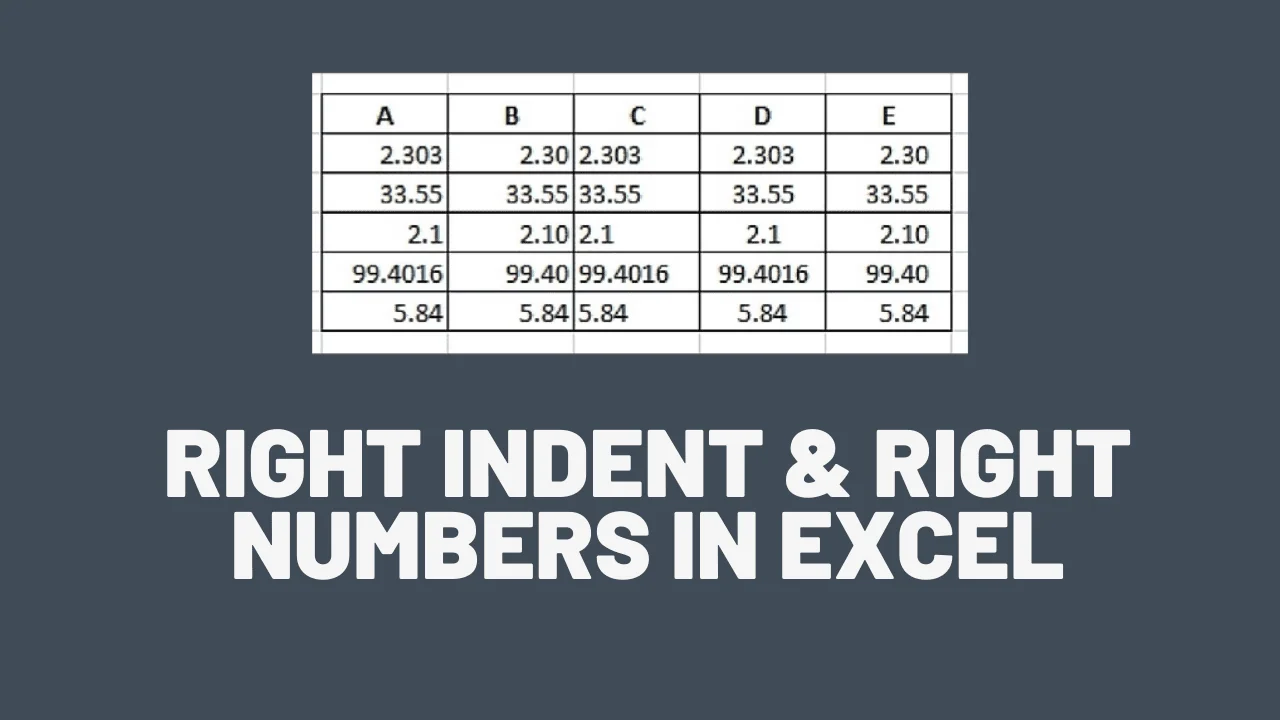
Look at the table on the right. A list of 5 numbers has been presented in 5 different formats. While the data is not aligned in columns A, C and D in terms of the decimal point, data in columns B and E appears better. But, most people would think of the numbers in column in B sort of running into those in column C. Hence, column E seems to be that best choice for formatting such a data. Now, the question is “how to achieve this?”.

Thankfully we have Michael Alexander of http://DataPigTechnologies.com to show the way.

Right Indent & Align Numbers in Excel

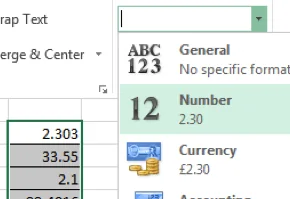
 1 – Number Format

Select your data and choose the appropriate number format. You can select the number of decimal places as may please you.rightalign1
 2 – Right Alignment

Make sure your data is aligned to the right. To do this, keep your data selected and press the button highlighted in the image on the right. It can be found under the Home tab, within the Alignment section.rightalign2

3 – Let’s Indent!

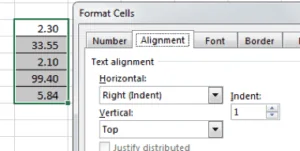
Now, let’s get to the final step. Select your data, right-click on it and choose “Format Cells…”. Now, under the Alignment tab, choose “Right (Indent)” for the Horizontal option and put in the indent number. This will normally be 1 or 2. And press “OK” and see the magic! rightalign3
4 – Let’s Indent Again!

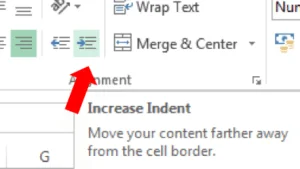
Well, Microsoft knows when you will discover this function, you are bound to fall in love with it. That’s why, they have created a much simpler way to access it. Under the Home tab, within the Alignment section, you have a button that increases the right indent. It has been shown in the image on the right.rightalign4
What’s Next?

It’s easy, very easy. And right in front of you. Try it out!

And… share this awesome tip with other Excel lovers.

Written by

Jamani Arsalan

Consultant, International Professional Services

  • Project Management
  • Statistical Analysis
  • Health Analytics
I am a consultant, currently based in Middle East, at an international professional services firm. My work largely revolves around project management, and statistical analysis. And my professional interests include developing my knowledge within the discipline of health analytics.

Read more articles by Jamani Arsalan

Editorial standards

Fact Checking & Editorial Guidelines

Every article on Excel TV is held to a published editorial standard. The goal: accurate, current, and useful — without filler.

  1. Expert review. Drafts on technical Excel topics are reviewed by a contributor with hands-on, working knowledge of the feature being covered.
  2. Source validation. Claims about Excel behavior are tested in current Microsoft 365 builds. Third-party product claims are sourced from the vendor's own documentation.
  3. Disclosure. Affiliate links, sponsorships, and any commercial relationships that influenced a piece are disclosed in-line and at the foot of the article.
  4. Updates. Articles are revisited when Microsoft ships changes that affect the content. The most recent revision date is shown on every post.

Spot a problem? Email editor@excel.tv and we will look at it.

Subject-matter review

Reviewed by Subject Matter Experts

Technical Excel articles are reviewed by contributors with verifiable, hands-on experience in the topic — not generalist editors.

  • Qualified reviewers. Reviewers include Microsoft Excel MVPs, working business-intelligence practitioners, and Excel TV editorial staff. See each author's page for credentials.
  • Current to a known Excel build. Procedural articles state which Excel version they were validated against. Where Microsoft has since changed behavior, the article carries an inline update note.
  • Clarity check. Reviewers verify steps are reproducible by a reader at the assumed skill level — not just technically correct in a vacuum.

Want to contribute or review for Excel TV? See the about page.